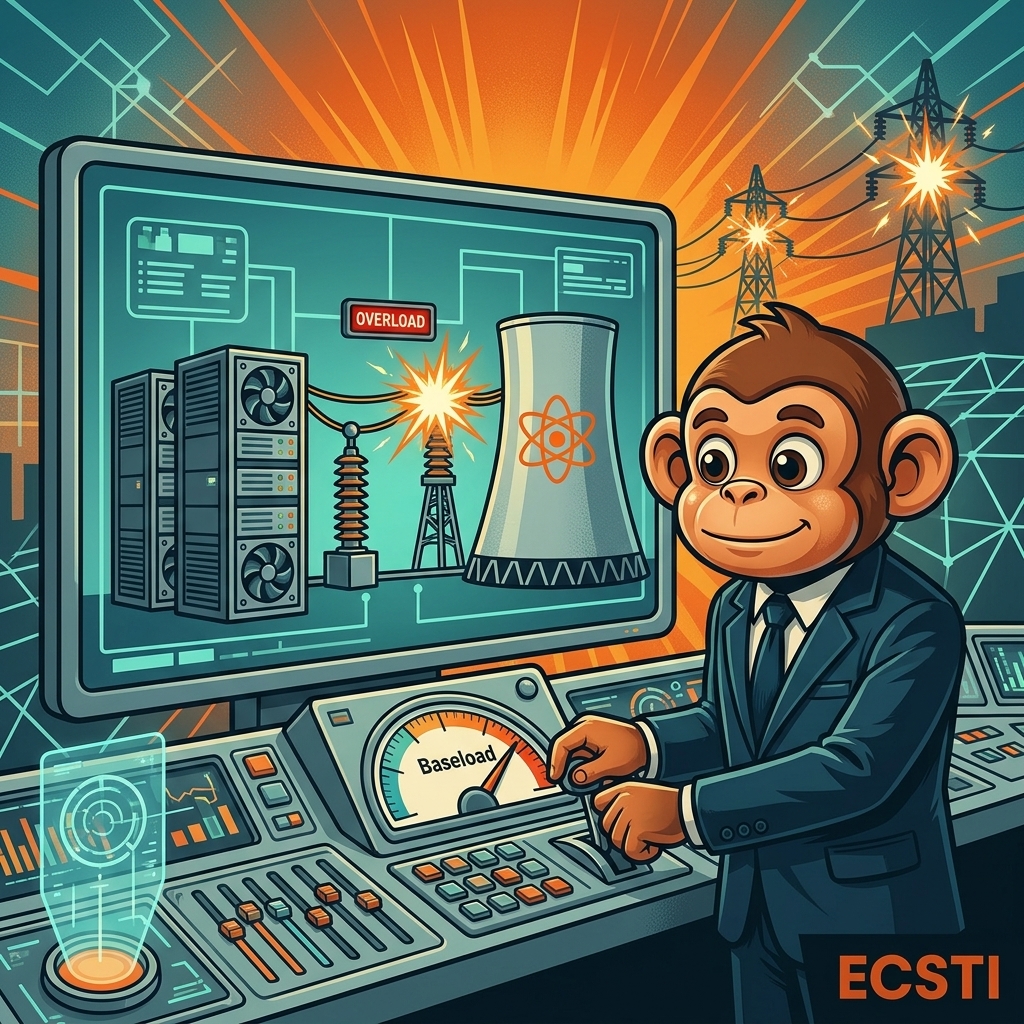

Nvidia reports earnings on August 21, 2026, and the number that comes out will move the entire AI trade. Data center revenue, gross margin, and forward guidance will be treated as a verdict on whether the AI infrastructure build-out is still accelerating. That framing is not wrong. It is just incomplete.
The Hook:
Nvidia earnings confirm whether the GPU demand floor is holding, but the more consequential pricing question is which software stack controls utilization rates above the chip. The harness and orchestration layer is where enterprise AI margin is beginning to concentrate, and that means a strong Nvidia print is necessary but not sufficient for identifying where the next re-rating happens.
Nvidia reports earnings on August 21, 2026, and the number that comes out will move the entire AI trade. Data center revenue, gross margin, and forward guidance will be treated as a verdict on whether the AI infrastructure build-out is still accelerating. That framing is not wrong. It is just incomplete.
The more important question is not whether GPU demand is holding. It is which software layer sits above the GPU and controls how that compute gets used. That layer, the harness and orchestration stack that routes inference, chains models, manages agents, and governs outputs, is where enterprise AI margin is beginning to concentrate. Nvidia earnings are a demand floor check. The harness layer is the value ceiling question, and those are two different investments.
What Is the AI Harness Layer and Why Does It Matter Now?
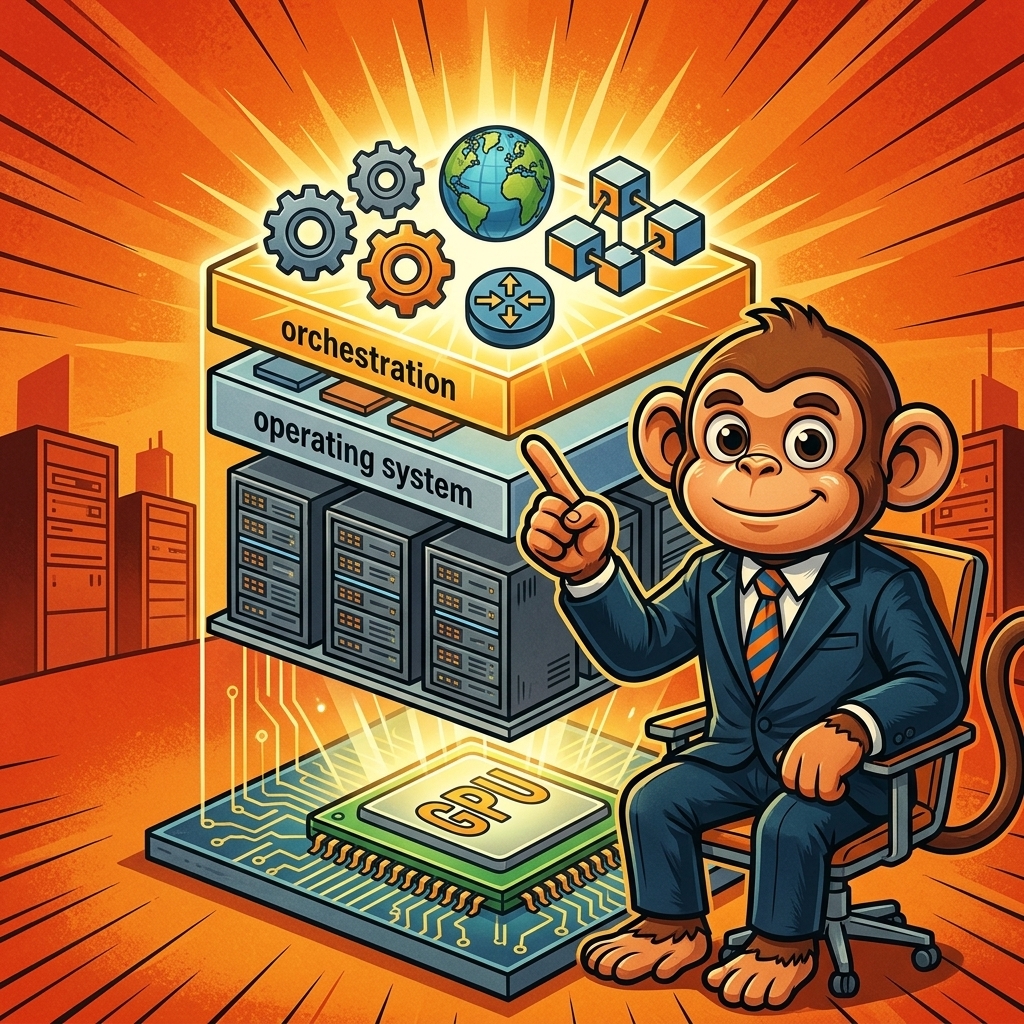
The AI harness layer is the software infrastructure that sits between a raw GPU cluster and a working enterprise AI application. It includes agent orchestration frameworks, inference routing systems, retrieval-augmented generation pipelines, workload schedulers, and the middleware that connects model outputs to actual business workflows.
For most of the past three years, investor attention focused on the model itself and the chips that trained it. That made sense when models were scarce and differentiated. The shift happening now is that model APIs are becoming interchangeable. When the underlying model is a commodity input, the software that decides which model to call, how to chain it, how to allocate compute across workloads, and how to govern the output becomes the differentiated and sticky layer.
Enterprises do not pay premium margins for raw compute. They pay for reliability, control, and integration with the systems they already run. The harness layer is where those properties live. That is why the investment narrative is beginning to name it as the next margin capture point in the AI stack.
Why Nvidia Earnings Are a Demand Floor Check, Not the Value Ceiling
Nvidia is the dominant supplier of GPU compute for AI training and inference. Its data center revenue is the most direct observable signal of whether hyperscaler and enterprise AI spending is accelerating, plateauing, or contracting. Every downstream AI infrastructure trade gets calibrated against that number.
But being a necessary input is not the same as being the margin capture point. A commodity input to a growing market can still generate substantial absolute profit at scale, and Nvidia's gross margins on data center GPUs remain high. The issue is not whether Nvidia is a good business. The issue is what the earnings number actually tells you about where value is concentrating in the stack above the chip.
A strong Nvidia print confirms that hyperscaler capex commitments are being honored and that the physical infrastructure build-out continues. It does not tell you which orchestration platform is capturing the rent on those compute cycles. Those are separate questions, and conflating them leads to a portfolio that is positioned for the floor rather than the ceiling.
One structural risk worth noting: hyperscaler capex can be front-loaded. Strong current GPU demand does not automatically confirm that the same absorption rate continues in future quarters. Nvidia earnings are a present-tense signal, not a forward guarantee.
First-Order Effects: What the Earnings Number Directly Confirms
If Nvidia reports strong data center revenue and raises guidance, the immediate confirmation is that hyperscaler purchase commitments are intact. Microsoft, Google, Amazon, and Meta have all disclosed multi-year AI infrastructure plans. A Nvidia beat means those plans are being executed, not deferred.
That confirmation sustains downstream demand for the physical stack: power, cooling, networking, and colocation. Data center REITs and power infrastructure plays benefit from continued GPU density, because more chips in a rack means more watts consumed and more cooling required. This is a passive but real beneficiary of the utilization story.
A miss, on the other hand, would force a broad re-evaluation of AI capex assumptions across the entire stack. Because Nvidia is treated as the demand proxy for the whole AI cycle, a negative surprise would compress multiples across both hardware and software AI plays simultaneously, regardless of their individual fundamentals. That asymmetry is worth holding in mind before earnings: the downside scenario is correlated across the trade in a way the upside is not.
Second-Order Effects: Where the Stack Rotation Gets Interesting
The second-order story is about what happens to valuation if the market begins pricing the harness layer explicitly. This is where the analysis gets more consequential for portfolio construction.
Enterprise AI software platforms with strong orchestration and workflow integration capabilities are positioned to attract valuation re-rating if investors start pricing the harness layer as the new moat. Microsoft is the clearest example. It controls both the distribution channel for OpenAI models through Azure and the enterprise workflow integration layer through Office and Azure AI Studio. If orchestration is where margin concentrates, Microsoft is already embedded in that position across a large installed base. A Nvidia earnings beat validates Azure AI infrastructure demand at the same time the harness thesis reinforces Copilot as the orchestration stack enterprises are already buying. That dual confirmation is not available to most other players.
The second-order effect that gets less attention is what happens to pure-play model API providers. Orchestration frameworks that abstract the model layer reduce switching costs between underlying models. If enterprises buy inference through the harness, model providers lose direct pricing power and become interchangeable compute inputs. That is margin compression arriving not from competition at the model level but from the layer above it.
A third effect worth tracking: AI-focused ETFs with heavy semiconductor weighting may lag relative to software-weighted AI baskets if capital begins rotating toward orchestration plays. A strong Nvidia print combined with a narrative shift toward software value capture could produce a situation where GPU stocks are fairly priced but not re-rated, while software orchestration names attract incremental multiple expansion. ETF flow data in the weeks after earnings would be an early signal of whether that rotation is beginning.
Apple's situation illustrates the exposure side of the same rotation. The company is cutting Vision Pro hardware and Siri AI team headcount, which removes the near-term product catalyst for its AI hardware story. Apple has historically not competed in enterprise middleware, so it has no orchestration offset. It faces the consumer AI slowdown without the enterprise software position that would allow it to participate in harness-layer repricing.
Who Could Benefit if the Harness Layer Becomes the Margin Point?
Microsoft sits in the strongest structural position. Azure AI Studio and Copilot already function as orchestration and harness infrastructure for enterprise customers. The installed base of Office and Azure customers gives Microsoft a distribution advantage that does not require winning a new sales cycle. If orchestration is the margin layer, Microsoft may already be collecting it.
ServiceNow and Salesforce have enterprise workflow integration as their core business. Both companies are building AI orchestration capabilities on top of existing process automation platforms. Enterprises that already run ServiceNow for IT workflows or Salesforce for CRM are natural buyers of AI orchestration from those same vendors, because switching costs are high and integration is already done.
Palantir's architecture has always been about connecting data pipelines to decision workflows. Its AIP platform is a direct play on the harness-layer thesis, and its existing government and enterprise contracts provide a baseline of utilization that is not dependent on new sales cycles.
Enterprise AI middleware and agent orchestration startups also gain valuation support when the investment narrative explicitly names their category as the next margin capture point. Narrative shifts in AI investment themes drive venture and public market capital toward the named category. That is not a fundamental argument, but it is a real market dynamic.
Nvidia itself wins if earnings confirm sustained hyperscaler demand. Being a commodity input to a growing market is still a strong business when volume is large enough and no credible substitute exists at scale. The harness-layer thesis does not make Nvidia a bad investment. It reframes what Nvidia earnings can and cannot tell you about the rest of the stack.
Who Could Be Exposed?
Standalone AI model API providers without strong orchestration or enterprise workflow integration face the clearest margin pressure. If enterprise buyers route inference through orchestration platforms, model providers lose direct customer relationships and pricing leverage. They become interchangeable inputs rather than differentiated products. The value they generate gets captured by the layer above them.
Apple faces a dual headwind. The Vision Pro and Siri layoffs remove the near-term AI hardware catalyst, and Apple has no established position in enterprise middleware or orchestration. Consumer AI hardware and voice assistant bets are being repriced downward, and Apple has no enterprise software offset to absorb that pressure.
AI ETFs with heavy semiconductor concentration may lag if capital rotates toward software and orchestration plays, even if Nvidia earnings are strong. Investors holding semiconductor-heavy AI baskets as a proxy for the entire AI trade may find that the proxy becomes less accurate as the value stack shifts upward.
Open-source orchestration frameworks such as LangChain and LlamaIndex represent a specific risk to the harness-layer thesis itself. If no single vendor can capture harness-layer margin because open-source tools distribute that value across the ecosystem, then the investment thesis for any individual orchestration platform weakens. This is the most important uncertainty in the entire argument, and it deserves honest acknowledgment.
Bull Case vs Bear Case for the Harness-Layer Thesis
Bull case: GPU supply normalizes over the next several quarters, model APIs become genuinely interchangeable, and enterprises begin selecting AI platforms based on orchestration quality, governance, and workflow integration rather than model performance. The software vendors already embedded in enterprise workflows, primarily Microsoft, ServiceNow, and Salesforce, capture durable margin through high switching costs and deep integration. Utilization rates above the GPU become the decisive pricing signal, and investors who positioned in the orchestration layer before the narrative became consensus earn the re-rating. Nvidia remains a strong absolute business but is no longer the primary vehicle for AI upside.
Bear case: The harness-layer thesis is currently an interpretation with thin hard data supporting enterprise willingness to pay for orchestration software at premium margins. Enterprise AI deployment is still early enough that most buyers are not yet choosing between orchestration platforms at scale. Open-source frameworks prevent any single vendor from capturing the margin. Nvidia earnings continue to be the dominant signal because GPU demand remains the binding constraint, and the software layer above it does not yet generate the revenue concentration needed to justify a re-rating. The thesis is correct directionally but early by two or three years, which in market terms means it may not be actionable yet.
The honest position is that the bull case is structurally plausible and the bear case is a timing and concentration risk, not a fundamental rebuttal. Investors who want exposure to the harness-layer thesis need to decide whether they are buying the structural argument or waiting for revenue evidence.
What to Watch After Nvidia Reports
The primary data points from Nvidia earnings are data center revenue, gross margin, and forward guidance. Those three numbers set the demand floor for the entire AI capital expenditure cycle.
Beyond the headline, watch for any commentary on inference versus training revenue mix. A shift toward inference revenue would confirm that AI is moving from build-out to deployment, which is the precondition for the harness layer becoming a real purchasing decision rather than an architectural discussion.
Hyperscaler capex disclosures from Microsoft, Google, and Amazon in upcoming earnings will confirm whether GPU absorption is sustained or beginning to normalize. If capex guidance softens even as Nvidia beats, that divergence is a signal worth examining.
Enterprise AI software earnings from Salesforce, ServiceNow, and Palantir are the most direct test of whether harness-layer revenue concentration is materializing. Look for any explicit pricing or attach-rate data on AI orchestration and workflow integration products.
AI ETF flow data showing whether capital is rotating from semiconductor-heavy to software-heavy baskets would be an early market signal that the narrative shift is translating into actual allocation decisions.
Pricing data from major model API providers is the canary for margin compression. If API pricing is falling faster than compute costs, the orchestration layer is likely already abstracting and commoditizing model access.
How an autonomous investment agent could approach this
A development like this illustrates why the AI infrastructure trade requires continuous monitoring across multiple layers simultaneously, not a single earnings-day read. The GPU demand signal, the orchestration software revenue signal, the hyperscaler capex signal, and the model API pricing signal all move at different speeds and tell different parts of the story. Tracking them together, against an investor-defined mandate that specifies which layer of the stack matters for a given portfolio, is exactly the kind of ongoing research workflow that autonomous investment agents are built for.
An agent working within a technology mandate could monitor Nvidia earnings alongside enterprise software revenue disclosures, ETF flow data, and API pricing trends, then test how shifts in each signal affect the portfolio's exposure to the harness-layer thesis over time. That kind of continuous, multi-signal monitoring is difficult to maintain manually across a full research calendar. ECSTI lets investors build autonomous research agents around their own investment mandate so those agents can track developments like these and test new hypotheses through paper trades. See how that works at /platform.
ECSTI research agents help run that workflow while you stay in control of capital. You are welcome to try a few agents free on the platform.
Bottom Line
Nvidia earnings confirm whether the GPU demand floor is holding, but the more consequential pricing question is which software stack controls utilization rates above the chip. The harness and orchestration layer is where enterprise AI margin is beginning to concentrate, and that means a strong Nvidia print is necessary but not sufficient for identifying where the next re-rating happens.
Nvidia earnings confirm whether the GPU demand floor is holding, but the more consequential pricing question is which software stack controls utilization rates above the chip. The harness and orchestration layer is where enterprise AI margin is beginning to concentrate, and that means a strong Nvidia print is necessary but not sufficient for identifying where the next re-rating happens.
Related reading
Want an agenda from rules you already trust?
Try a few ECSTI agents free. Research workflow, you keep custody.
Disclaimer: This is for learning only, not financial advice. Nothing here is a recommendation to buy or sell any security. Do your own research and talk to a qualified professional before you invest.
Questions, answered.
What is the AI harness layer and why do investors think it captures more value than GPU hardware?
The AI harness layer is the software infrastructure that sits between raw GPU compute and a working enterprise AI application. It includes agent orchestration, inference routing, RAG pipelines, and workflow integration middleware. Investors think it captures more value because as GPU supply normalizes and model APIs become interchangeable, the software that controls how compute is allocated and how model outputs connect to business processes becomes the differentiated and sticky layer. Enterprises pay for reliability and control, not raw compute.
Why are Nvidia earnings considered a demand floor check rather than a ceiling for AI infrastructure value?
Nvidia earnings confirm whether hyperscaler and enterprise GPU purchase commitments are being honored, which sets the baseline for the entire AI capex cycle. That makes them a demand floor check. But they do not reveal which software stack is capturing the margin on top of that compute, which is the value ceiling question. A strong Nvidia print is necessary context for the AI trade but does not identify where the next re-rating happens in the stack above the chip.
Which software companies benefit most if large language models become commodities?
Companies with strong enterprise workflow integration and orchestration capabilities benefit most. Microsoft is the clearest example, with Azure AI Studio and Copilot already functioning as orchestration infrastructure across a large installed base. ServiceNow and Salesforce benefit because their existing process automation platforms give them high switching costs and deep integration with enterprise buyers. Palantir's AIP platform is a direct play on connecting data pipelines to decision workflows. All three benefit from model commoditization because they sit above the model layer.
What happens to Nvidia stock if the AI value stack shifts from chips to orchestration software?
Nvidia remains a strong absolute business even if the value narrative shifts upward. Being a commodity input to a large and growing market still generates substantial profit when volume is high and no credible substitute exists at scale. The harness-layer thesis does not make Nvidia a bad investment. It suggests that Nvidia may not be the primary vehicle for AI upside re-rating going forward, and that a strong earnings print may not translate into the multiple expansion it once did.
How do utilization rates above the GPU determine which platform wins enterprise AI margin?
Utilization rates measure how efficiently GPU compute is being used across workloads. The software layer that controls workload scheduling, inference routing, and resource allocation determines those rates. A platform that keeps GPUs more fully utilized at lower cost per output captures pricing power with enterprise buyers. Enterprises pay for that efficiency, not for the underlying chips. The orchestration platform that controls utilization rates effectively becomes the margin capture point because it sits between the buyer and the compute.
What does AI model commoditization mean for Microsoft, Google, and Amazon cloud margins?
Model commoditization is a mixed signal for hyperscalers. It compresses margins on model API access, where Google and Amazon compete directly with OpenAI and others. But it strengthens the position of cloud providers that also own the orchestration and workflow integration layer, which is primarily Microsoft through Azure and Copilot. Google and Amazon face more exposure if their AI value proposition is concentrated in model quality rather than orchestration depth. All three benefit from sustained GPU absorption regardless of where margin concentrates.
Which orchestration tools control enterprise AI workload scheduling and what does that mean for investors?
Microsoft Azure AI Studio, ServiceNow AI, Salesforce Agentforce, and Palantir AIP are among the enterprise-facing platforms with meaningful orchestration and workload integration capabilities. Open-source frameworks such as LangChain and LlamaIndex also control significant developer mindshare. For investors, the key question is whether any single vendor can establish switching costs strong enough to capture durable margin, or whether open-source distribution prevents that concentration. Vendors with existing enterprise workflow integration have a structural advantage because they are already embedded in the buyer's systems.
How should investors position across semiconductors and enterprise software as the AI harness layer matures?
This is not financial advice, but the structural argument suggests treating semiconductors as the demand floor and enterprise software with orchestration depth as the potential value ceiling. A Nvidia earnings beat confirms the floor is holding. Enterprise software earnings from ServiceNow, Salesforce, and Palantir are the more direct test of whether harness-layer revenue concentration is materializing. Investors who want exposure to the orchestration thesis may want to watch for revenue evidence before sizing positions, given that the thesis is currently more structural argument than confirmed revenue trend.