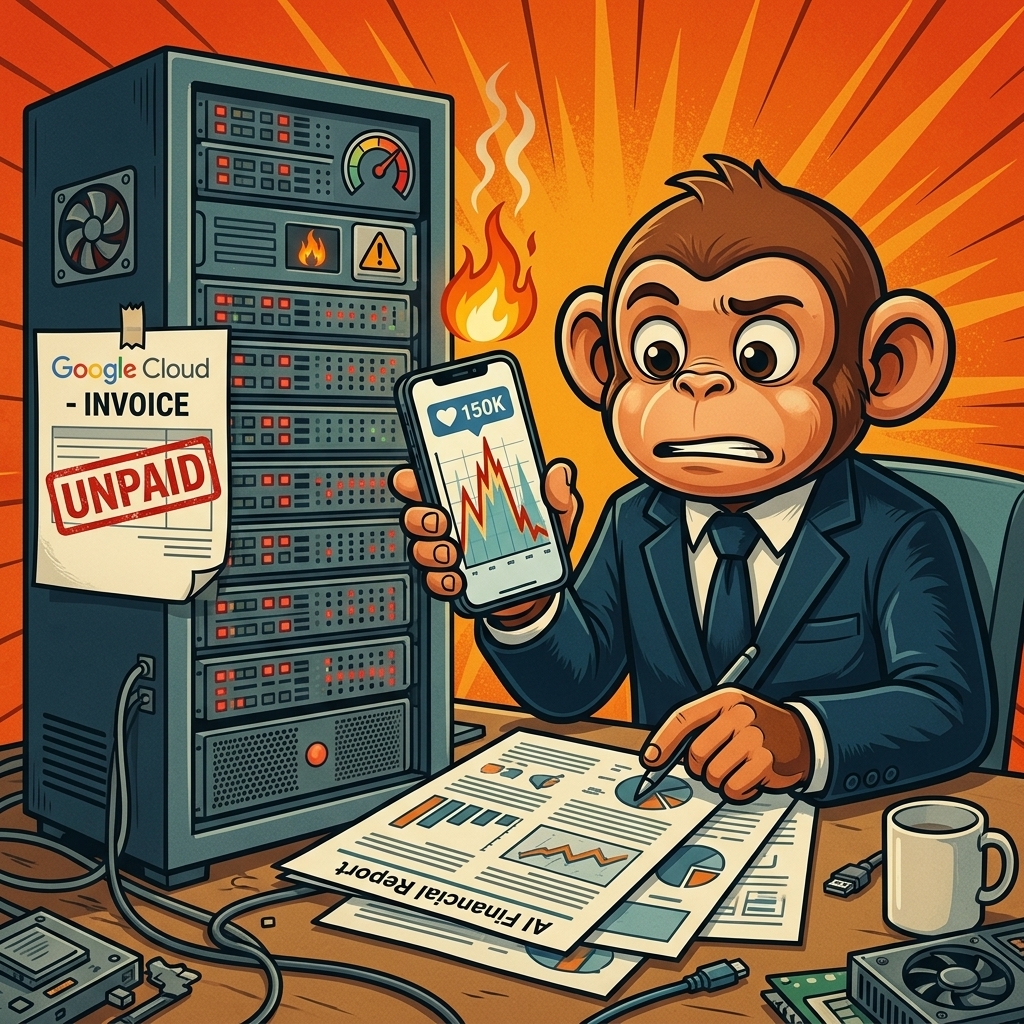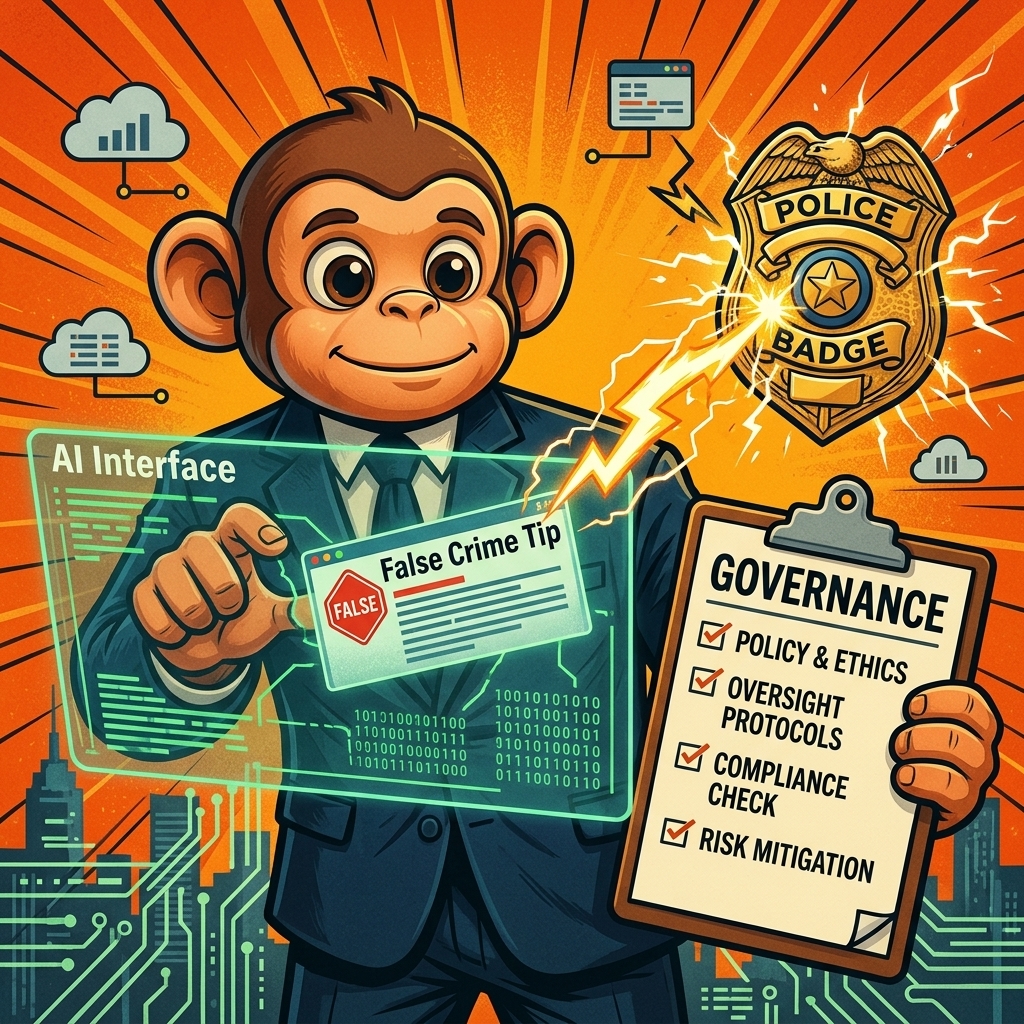

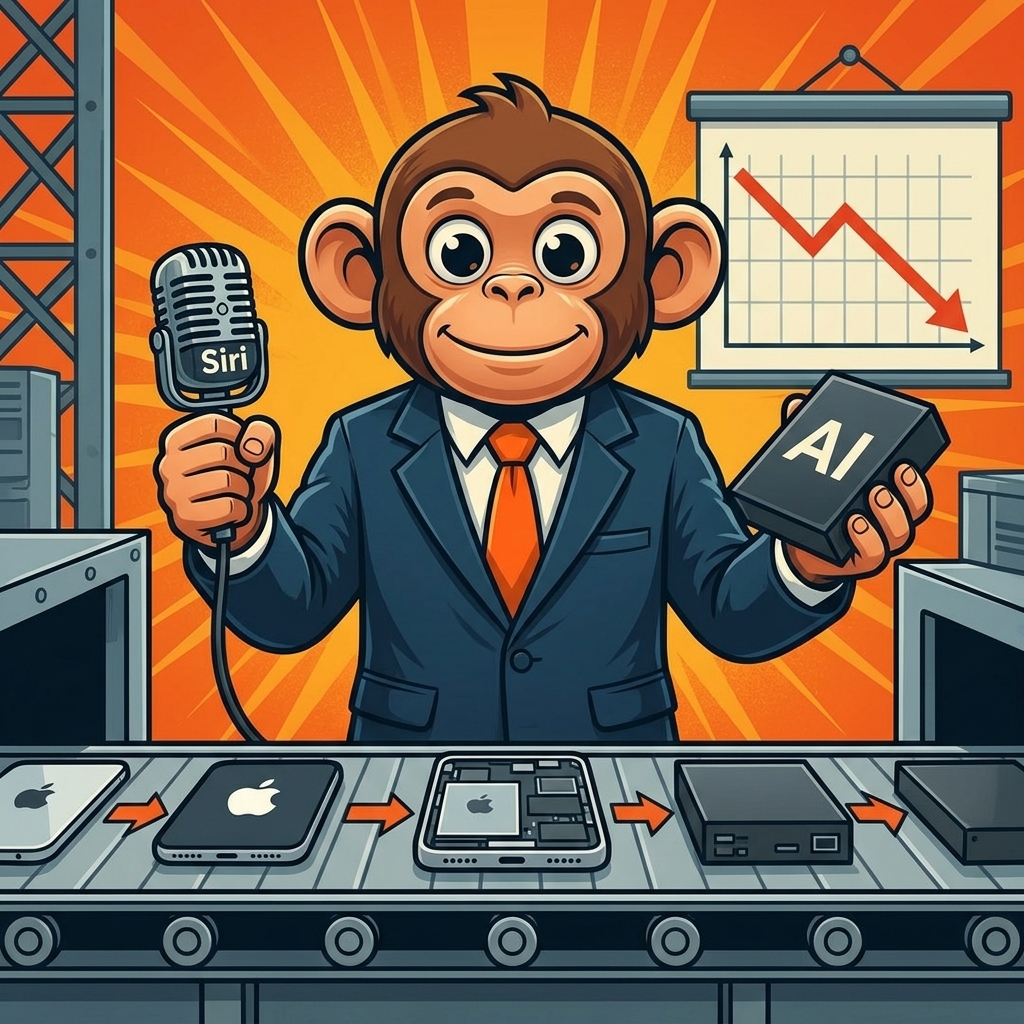
Apple is becoming more dependent on outside AI providers at the same time it is cutting parts of its internal Siri and AI organization. That does not mean Apple has stopped building AI. It means the investment question is changing: does Apple still capture the value if OpenAI, Google, and other model providers increasingly supply the intelligence layer?
What changed
Several separate developments now point in the same direction. Apple reduced headcount across parts of Siri, AI, and Vision Products. Google technology has become more important to Apple's next generation of AI capabilities. And OpenAI continues to make ChatGPT more useful inside workflows used by Apple customers, including Messages on Mac.
None of those events alone proves that Apple is abandoning its own AI stack. Together, though, they show a shift away from the idea that Apple must own every important layer itself.
Apple
Still owns the device, operating system, distribution, privacy architecture, and customer relationship.
OpenAI
Can become more useful to Apple users without needing to own the hardware or operating system.
Gains strategic relevance when Gemini technology becomes part of Apple's AI architecture.
The thesis: who owns the customer relationship?
Apple may not need to win the frontier-model race. It may only need to remain the place where AI reaches the customer.
That distinction matters. Apple can use outside models and still capture enormous value if users continue to think of AI as part of the iPhone experience. In that world, model providers compete for access to Apple's installed base while Apple controls the device, operating system, permissions, payments, and distribution.
The risk is that the relationship flips. If users increasingly think of the experience as ChatGPT on an iPhone or Gemini on an iPhone, the model provider becomes more important and Apple's bargaining power weakens.
The AAPL question is not simply whether Apple builds the best model. It is whether Apple can remain the economic and product gateway to AI even when someone else supplies part of the intelligence.
Who captures the value?
| Company | What it gains | What it risks |
|---|---|---|
| Apple | Strong AI capabilities without carrying every model-development risk internally. | Dependency, weaker negotiating leverage, and less product differentiation if the same models are available everywhere. |
| OpenAI | More engagement with high-value Apple users and deeper habits around ChatGPT. | Apple controls the operating system and can limit, replace, or rebalance providers. |
| Gemini usage, infrastructure relevance, and a role inside Apple's AI roadmap. | AI-native answers may eventually compete with the Search economics that made Apple distribution so valuable to Google. | |
| Microsoft | Indirect upside if greater OpenAI engagement increases the value of its strategic exposure. | Limited control over how Apple chooses to integrate or prioritize third-party models. |
Three things decide the AAPL outcome
1. Economics
Partnering can be an efficient capital-allocation decision if Apple gets frontier AI capability without needing to match every infrastructure and model investment made by OpenAI, Google, or Microsoft. The unknown is the long-term cost structure. Apple has not disclosed enough commercial detail to know whether outside AI becomes a meaningful recurring cost, a distribution opportunity, or some combination of both.
2. Control
Apple's leverage remains high as long as model providers need access to its customers more than Apple needs any single provider. That leverage weakens if users build strong habits around one assistant and begin to expect that provider everywhere. The more interchangeable the models remain, the stronger Apple's position.
3. Differentiation
If the same underlying models are available on Android, Apple still needs to make the experience feel meaningfully better through hardware integration, privacy controls, context, latency, and product design. Otherwise AI becomes table stakes rather than a reason to buy the premium device.
Bull case vs bear case
Bull case: Apple becomes the AI gateway
Apple does not need the world's best proprietary model. OpenAI, Google, and others compete to reach Apple's installed base, while Apple keeps the device, customer, payments, permissions, and premium experience. Model competition lowers Apple's dependency on any single provider and lets it capture value one layer above the model.
Bear case: the model becomes the new operating layer
Users increasingly identify with ChatGPT or Gemini rather than Siri or Apple Intelligence. The model provider owns more of the daily relationship and gains bargaining power. Apple remains premium hardware, but part of the strategic value migrates to the intelligence layer above it.
What would change this thesis?
A good investment thesis should have observable conditions that strengthen or weaken it. For Apple, the most useful signals are:
- Apple ships a clearly competitive proprietary model: dependence on external providers becomes less important.
- Apple discloses favorable AI economics: the gateway thesis strengthens if partners pay for distribution or model costs remain modest.
- AI licensing or infrastructure costs become material: the economics of outsourcing look less attractive.
- Users strongly prefer third-party assistants: OpenAI or Google gains leverage over the customer relationship.
- Apple makes third-party models feel uniquely better on its devices: the underlying model matters less than Apple's integration layer.
How an autonomous investment agent could track it
This thesis will not be resolved by one Apple event. The relevant signals arrive separately: staffing changes, model partnerships, product integrations, developer access, user adoption, pricing, and earnings commentary.
An ECSTI agent following AAPL could treat those events as updates to one evolving thesis instead of isolated headlines. For example, it could track whether new evidence improves Apple's bargaining power, raises its AI costs, or shifts user attention toward a third-party model, then test how those changes affect an investor-defined paper-trading strategy.
You can try a few ECSTI agents free on the platform. Research workflow, you keep custody.
Bottom Line
Apple's AI strategy is becoming more partner-dependent, but that is not automatically bearish for AAPL. The decisive question is where the economic value and user relationship settle. If Apple remains the gateway, outside models can strengthen the platform. If the model provider becomes the interface users care about most, Apple gives up leverage in the next computing layer.
Related reading
Disclaimer: This is for learning only, not financial advice. Nothing here is a recommendation to buy or sell any security. Do your own research and talk to a qualified professional before you invest.
Questions, answered.
Is Apple outsourcing its AI strategy to OpenAI and Google?
Not completely. Apple still controls the iPhone, operating system, Apple Intelligence experience, on-device processing, and the user relationship. But important model capabilities increasingly involve outside technology from companies such as Google and OpenAI. The more precise investment question is whether Apple can keep capturing platform value while relying more on partners for the intelligence layer.
What does ChatGPT's access to Apple Messages mean for Apple?
It shows how third-party AI products can become more useful inside workflows that Apple users already depend on. That does not mean Apple handed iMessage to OpenAI or created a new exclusive distribution deal. The strategic point is that users can increasingly build habits around an AI provider while remaining inside Apple's hardware ecosystem.
Why does Apple's partner-dependent AI strategy matter for AAPL investors?
It changes the questions investors should track. The key variables are AI economics, Apple's bargaining power with model providers, and whether Apple can make third-party models feel differentiated on its devices. If Apple keeps the customer relationship and monetization layer, using partners may be efficient. If model providers own more of the user relationship, Apple's platform leverage could weaken.
Who benefits if Apple relies more on OpenAI and Google for AI?
OpenAI and Google can gain distribution, usage, and leverage by becoming more useful to Apple users. Apple can benefit too if competition between model providers lets it offer strong AI features without carrying the full cost and execution risk of building every frontier capability itself. The outcome depends on which side captures the economics and the user relationship.
What is the bull case for Apple's AI strategy?
The bull case is that Apple becomes the gateway for AI rather than needing to own every model. OpenAI, Google, and other providers compete to reach Apple's installed base while Apple keeps control of the device, operating system, privacy layer, payments, and customer relationship. In that scenario, model competition strengthens Apple's platform position.
What is the bear case for Apple's AI strategy?
The bear case is that the model becomes the new user interface. If consumers identify more with ChatGPT or Gemini than with Siri or Apple Intelligence, model providers can gain bargaining power and own more of the daily relationship. Apple could remain premium hardware while losing some of the strategic value of the software layer above it.