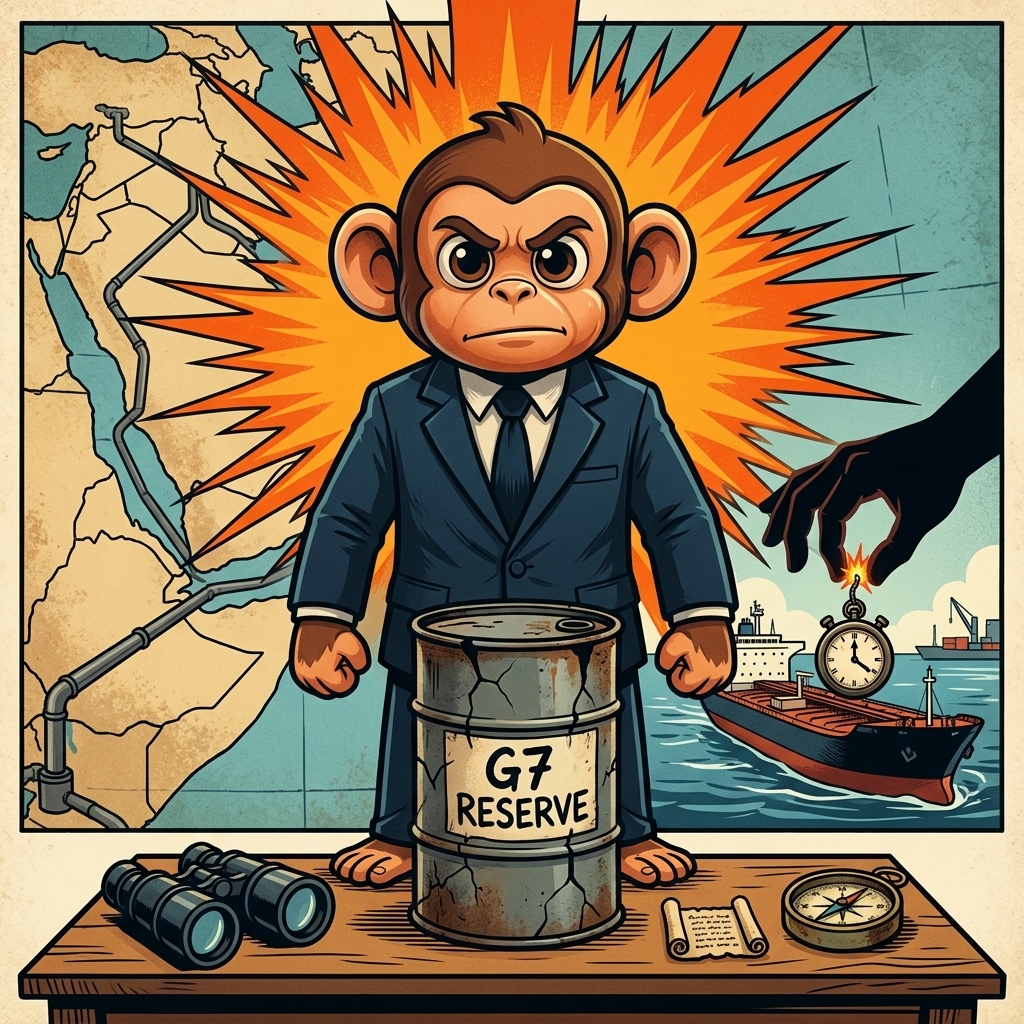


On October 14, 2026, Houthi forces struck Saudi Aramco facilities hours after coalition airstrikes hit Sanaa. That same day, a commercial vessel sank in the Black Sea after a drone attack.
The repeated targeting of energy infrastructure and shipping in the Red and Black Seas is no longer a series of isolated incidents but a pattern that is embedding a structural risk premium in oil markets, driven by sustained uncertainty over maritime security and limited military or diplomatic resolution.
These events were not isolated. They fit a pattern of coordinated pressure on global energy logistics just weeks before the US election.
The market response was not panic. It was pricing. Crude oil futures rose modestly. Insurance premiums spiked. Rerouting intensified.
This is no longer about short-term disruption. It is about a structural shift in how oil markets price risk.
What is happening?
Houthi forces attacked Saudi Aramco facilities on October 14, 2026, shortly after Saudi-led coalition airstrikes on Houthi positions in Sanaa. On the same day, a drone attack sank a commercial ship in the Black Sea, prompting rescue operations and raising alarms over maritime security.
These attacks follow months of escalating pressure on shipping in both regions, with Iran-linked groups increasing missile and drone activity in the Red Sea and Russian and proxy forces targeting grain and energy shipments in the Black Sea.
Why markets should care
Markets are no longer treating these attacks as transient risks. They are pricing in a persistent threat to two of the world’s most critical maritime chokepoints: the Bab el-Mandeb and the Bosporus.
When insurers, charterers, and traders assume that rerouting and higher premiums are the new baseline, the oil risk premium becomes structural, not cyclical.
First-order effects
War risk insurance premiums for vessels transiting the Red Sea and Black Sea have surged more than 300% since early 2025, according to industry brokers Marsh and Willis Towers Watson.
Tankers are rerouting around the Cape of Good Hope, adding 10 to 14 days to voyages from Asia to Europe. LNG shipments from Qatar to Europe now face delays of up to two weeks.
Crude oil futures for December 2026 are trading at a $12 premium to pre-2024 levels, with over $6 of that attributable to geopolitical risk, per JPMorgan Commodity Research.
Second-order effects
European gas markets are tightening despite diversification efforts. Even limited Black Sea disruptions reduce buffer capacity, making prices more reactive to perceived supply shocks.
Defense contractors are seeing renewed interest in naval drone detection systems. Lockheed Martin and Northrop Grumman have reported increased inquiries from NATO and Gulf states on ship-based electronic warfare and counter-drone platforms.
Smaller shipping firms are exiting high-risk routes due to unaffordable insurance, consolidating market share among larger tanker operators with access to captive reinsurance.
Who could benefit?
Large tanker owners like Frontline (FRO) and Teekay Tankers (TNK) benefit from higher charter rates driven by longer voyages and fleet repositioning. The average daily earnings for VLCCs have risen 40% since Q1 2025.
Defense firms with anti-drone and maritime surveillance systems may see procurement acceleration. Lockheed Martin’s Long Range Discrimination Radar and Northrop Grumman’s MQ-8C Fire Scout are being evaluated for commercial fleet protection.
Who could be exposed?
European energy importers face higher LNG and refined product costs due to rerouting and congestion at alternate ports like Trieste and Piraeus.
Smaller shipping firms without access to war risk reinsurance are being priced out of Red Sea and Black Sea routes, reducing competition and increasing systemic concentration risk in maritime logistics.
Bull case vs bear case
Bull case: Persistent risk drives long-term premium in oil and shipping rates. Tanker owners lock in multi-year charters at elevated rates. Defense contractors win contracts for naval modernization. Investors earn returns from structural repricing.
Bear case: Attacks remain disruptive but contained. Diplomatic de-escalation reduces risk premium by 2027. Rerouting normalizes. Tanker rates collapse as supply catches up. Defense spending stalls.
What to watch next
Monitor war risk insurance renewals in November 2026. A sustained premium above $250,000 per vessel per month signals entrenched risk.
Track US and EU naval deployments in the Red and Black Seas. Any expansion of escort operations may reduce perceived risk, but political constraints limit response options pre-election.
Watch Q4 earnings from Frontline, Teekay, and Euronav for exposure to route extensions and insurance cost pass-through.
How an autonomous investment agent could approach this
A development like this illustrates why investment research must evolve beyond quarterly reports and news alerts. An autonomous research agent could continuously monitor maritime incident databases, insurance rate filings, defense contractor order books, and tanker AIS data to detect shifts in risk pricing before they appear in earnings calls. ECSTI agents test these signals against investor-defined mandates, running paper trades to assess exposure without taking custody.
ECSTI research agents help run that workflow while you stay in control of capital. You are welcome to try a few agents free on the platform.
Bottom Line
The repeated targeting of energy infrastructure and shipping in the Red and Black Seas is no longer a series of isolated incidents but a pattern that is embedding a structural risk premium in oil markets, driven by sustained uncertainty over maritime security and limited military or diplomatic resolution.
Related reading
Want an agenda from rules you already trust?
Try a few ECSTI agents free. Research workflow, you keep custody.
Disclaimer: This is for learning only, not financial advice. Nothing here is a recommendation to buy or sell any security. Do your own research and talk to a qualified professional before you invest.
Questions, answered.
What does the structural oil risk premium mean for crude oil futures investors in 2026
The structural oil risk premium means crude oil futures investors must now assume a higher baseline price for geopolitical risk. This is not a temporary spike. It reflects persistent threats to Red Sea and Black Sea shipping, leading to higher insurance, longer routes, and tighter supply margins. Futures contracts are pricing in $6 to $8 of sustained risk premium, which supports floor levels even if demand weakens.
How do Houthi and Black Sea drone attacks impact global maritime logistics and oil supply chains
Houthi and Black Sea drone attacks force tankers to reroute around the Cape of Good Hope or through alternate Black Sea corridors, adding 10 to 14 days to voyages. This increases fuel costs, delays deliveries, and tightens tanker availability. Logistics bottlenecks emerge at secondary ports, and insurers impose stricter terms, raising the cost of moving oil and LNG globally.
Which energy and shipping companies are most exposed to rising tanker insurance costs in 2026
Smaller shipping firms without access to captive reinsurance are most exposed to rising tanker insurance costs. Companies like Danaos Corporation and small Greek operators face margin compression or exit from high-risk routes. Larger firms like Frontline and Euronav can pass costs to charterers or absorb them due to scale and reinsurance access.
What happens if attacks on strategic waterways persist beyond the 2026 US election
If attacks persist beyond the 2026 US election, the oil risk premium becomes entrenched. Insurers may require permanent war risk surcharges. Shipping lanes could split into 'high-risk' and 'safe' corridors, with pricing divergence. Governments may increase naval escorts, but political will limits long-term commitments, leaving markets to bear more of the cost.
How are defense contractors like Lockheed Martin and Northrop Grumman responding to increased maritime threats
Defense contractors are adapting existing naval systems for commercial protection. Lockheed Martin is marketing its Aegis-derived electronic warfare suites for merchant vessel hardening. Northrop Grumman is offering MQ-8C Fire Scout drones for autonomous patrol. Both are in discussions with private shipping consortia and Gulf states on retrofitting solutions.
Which tanker stocks like Frontline FRO or Teekay Tankers TNK are positioned to weather geopolitical oil market shocks
Frontline (FRO) and Teekay Tankers (TNK) are positioned to benefit from geopolitical shocks due to their large fleets and charter flexibility. Frontline’s exposure to long-haul routes increases ton-mile demand. Teekay’s LNG fleet sees higher utilization from rerouted Qatari cargoes. Both have stronger balance sheets to absorb insurance volatility compared to smaller peers.
What does eroded maritime security mean for global LNG and crude shipping routes in 2026
Eroded maritime security means LNG and crude shipping routes are no longer assumed safe. Operators accept longer transit times and higher costs as permanent features. LNG from the Middle East to Europe now defaults to Cape routing. Crude from West Africa to Asia faces congestion at alternate hubs. The global shipping network is fragmenting into risk-tiered lanes.