
Everyone wants the next model name. The boring constraint is older: watts, wires, permits, and time.
If AI is the customer, electricity is becoming the scarce input. That is an infrastructure story, not a tip.
The Hook:
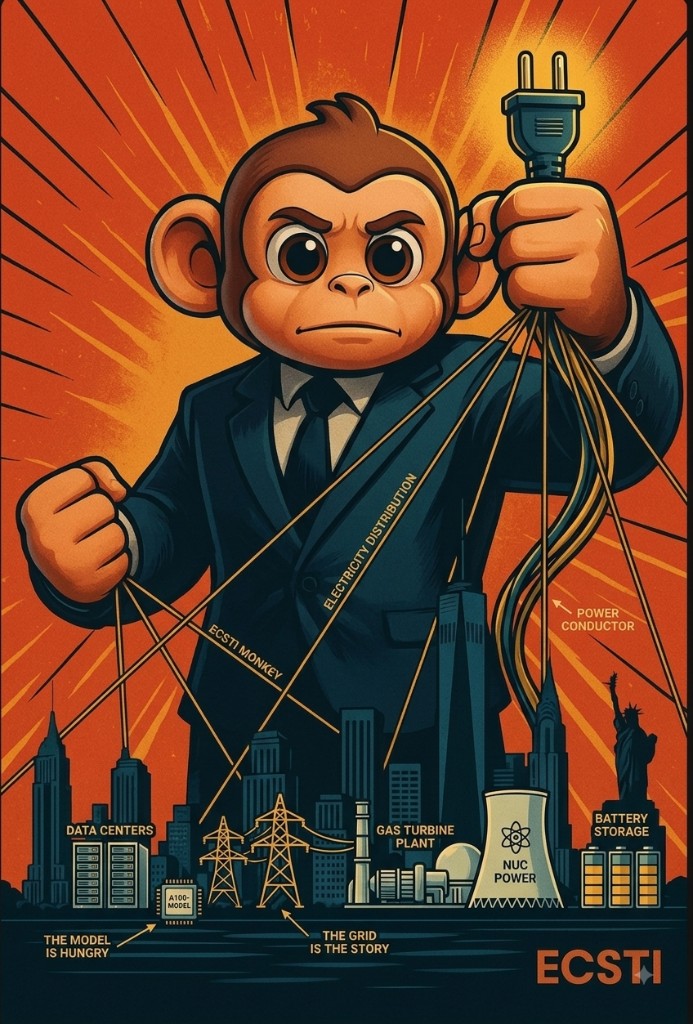
The model is hungry. The grid is the story.
Search interest in phrases like AI infrastructure and AI data center can cool week to week. The buildout does not cool with it. Hyperscalers still need firm power. Governments are parking AI campuses on federal land with onsite generation plans. Private players are testing small modular reactors next to modular data halls.
This piece is signal-led on purpose. You do not need a perfect Trends spike to see the second-order map: AI data center power is turning into something factor investors can research like a systematic exposure.
Plain words
- Hyperscaler: a huge cloud / AI compute buyer (think the biggest platforms).
- Firm power: electricity that is available when the load needs it, not only when the wind blows.
- SMR: small modular reactor, a smaller nuclear design meant to be built in factories and stacked.
- Infrastructure factor: a repeatable driver of outcomes (here: access to power and grid gear), not a one-ticker tip.
Stop asking which model won the week.
Ask who can plug in.
What just moved in the real world
Recent public signals (not tips, maps):
- Paducah path: DOE selected Brookfield to develop a large AI data center concept at the Paducah Gaseous Diffusion Plant site, with NextEra linked to multi-gigawatt gas generation and battery storage plans in public reporting.
- Savannah River path: NNSA picked Amentum to negotiate a phased lease for a ~1 GW AI data center with ~2 GW of planned onsite generation, gas first, advanced nuclear later.
- SMR demo path: Crusoe and Aalo have described pairing modular AI data center load with advanced reactor development at Idaho National Laboratory on a multi-year timeline.
The model is hungry. The grid is the story.
Notice the pattern. The campus announcement is the screenshot. The power plan is the plot. Announcements can outrun turbines. That lag is part of the research problem.
First-order vs second-order
EVENT: AI campuses need gigawatts
  → FIRST ORDER: buy chips / rent GPUs
  → SECOND ORDER: gas bridge, nuclear optionality, grid gear, storage, copper, transformers
  → SLEEVES: utilities, energy infrastructure, equipment, selective semis, materials
  → INVESTOR QUESTION: who can deliver firm power on a real timeline?
  → AGENDA: research the constraint, not the press release
Goldman-style research and DOE explainers already cover nuclear for data centers. The DIY gap is a mandate-friendly checklist: what belongs on today’s agenda, and what is just reactor cosplay.
A power-factor checklist for Alex
Before a name earns desk time
- Firm power source: grid contract, onsite gas, nuclear restart, SMR plan, or vapor?
- Bridge fuel: is natural gas doing the real work for five years while nuclear slides?
- Interconnection: stuck in a queue, or generating behind the fence?
- Storage: batteries as reliability, not decoration.
- Equipment lead times: transformers and switchgear can delay “ready” campuses.
- Materials: copper and other critical inputs show up as cost and delay risk.
- Mandate fit: does this sleeve match your factors, concentration limits, and time horizon?
That checklist is how you keep the model is hungry, the grid is the story from turning into “buy whatever ticker said nuclear on Twitter.”
What this is not
- Not “nuclear always wins.” Timelines slip. Fuel and permits are hard.
- Not “gas is evil.” Gas is often the bridge that actually turns lights on.
- Not a CoreWeave tip sheet. Earnings spikes are examples of infra volatility, not a process.
- Not a replacement for chip research. Semis still matter. Power is the constraint layer many people skip.
If energy risk is already loud in your book, pair this with the geography of oil risk in Oil Still Runs the World and the process habit in After the CPI Print. Different inputs. Same habit: second-order map before ticker romance.
Agenda template
AI infra theme still inside my mandate? (yes/no)
Power source for names on my list (gas / nuclear / grid / unknown):
Bridge vs destination fuel:
Timeline risk (this year / 3 years / fantasy):
Grid or equipment bottleneck to verify:
Materials exposure to check:
Ignore list (pure tip tickers):
Today's max 5 agenda items:
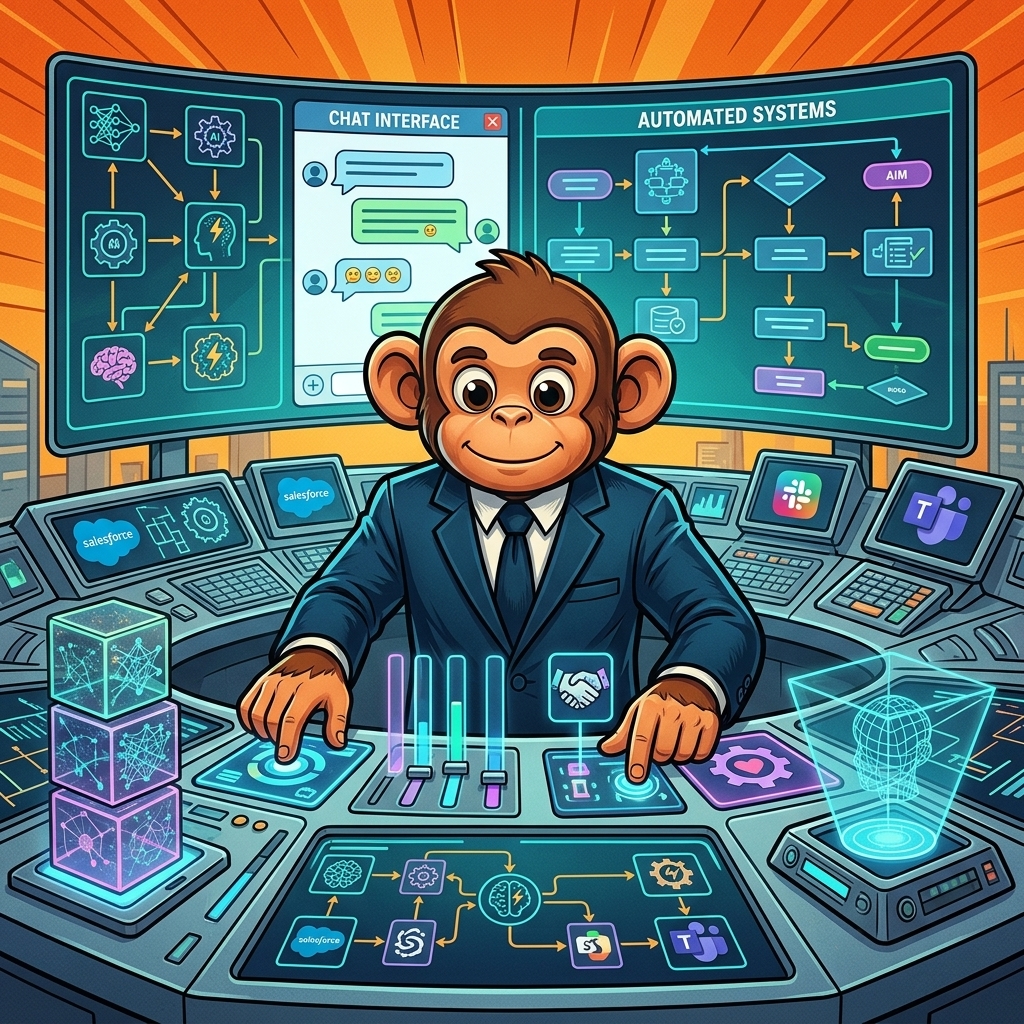
A research agent should help fill that card from rules you already wrote. A chat window that only repeats “AI needs power” is not research. Filters are not a desk either. Same family of mistakes.
How this maps to ECSTI
ECSTI is for investors who want the second-order map before the ticker. Encode the theme as research rules. Get an agenda when campuses and power deals move. Keep custody.
ECSTI research agents help perform that workflow. You remain in control. You are welcome to try a few agents free on the platform.
Chase watts with a checklist. Leave model-name astrology to the timeline. The model is hungry. The grid is the story.
Bottom Line
AI demand is also electricity demand. Federal campuses and SMR demos make the power layer impossible to ignore.
Treat hyperscaler power as an infrastructure factor: firm watts, bridges, grid gear, timelines.
Research the constraint. Do not tip-chase the press release. The grid is the story.
The model is hungry. The grid is the story.
Related reading
Want a research agenda when AI power and infra signals move?
Try a few ECSTI agents free. Encode the theme once. You keep custody.
Disclaimer: This is for learning only, not financial advice. Project announcements can change, slip, or fail. Nothing here is a recommendation to buy or sell any security. Do your own research and talk to a qualified professional before you invest.
Questions, answered.
Why do AI data centers need so much power?
Training and running large models is electricity-heavy and wants firm, around-the-clock supply. Intermittent power alone is hard without huge storage. That is why hyperscalers chase gas, grid deals, batteries, and nuclear options.
Is nuclear energy the answer for AI data centers?
Nuclear is a serious firm-power candidate, but timelines, permits, and fuel constraints are real. Many campuses use gas and storage first, with advanced nuclear as a later option. Treat nuclear as optionality, not a guaranteed 2026 watt.
What is AI infrastructure investing?
It is research into the physical stack behind AI: power, land, cooling, networking, chips, and the companies that supply them. The model brand is the headline. The watt is often the constraint.
What does “hyperscaler power as a factor” mean?
It means treating access to firm electricity and related infrastructure as a systematic driver of which AI-related businesses can actually deliver, similar to how investors already think about value or quality factors.
Should I buy nuclear stocks because of AI?
Not from a headline alone. Map the chain: who sells power, who builds grid gear, who owns fuel exposure, who is still on a gas bridge, and what your mandate allows. Tip-chasing reactor tickers is not a factor process.
How do federal AI data center projects change the story?
Projects on federal sites can bundle land, security, and onsite generation plans. That can move private capital into power and campuses faster than greenfield sites stuck in interconnection queues. Still check what is leased, funded, and actually built.
Where do copper and transformers fit in AI infrastructure?
Campuses need heavy electrical gear. Long lead times for transformers and pressure on copper and other materials can delay capacity even when chip supply looks fine. Power constraints are not only about reactors.
How should a DIY investor research AI power without becoming a tip machine?
Write a checklist: firm power source, bridge fuel, interconnection or onsite plan, storage, timeline risk, and portfolio fit. Rank an agenda from that list. Do not let a single funding headline rewrite your mandate.